







Why Certifications Decide Whether Your Body Lotion Order Clears Customs and Shelves
When you shortlist a body lotion manufacturer, the first question most buyers ask is price. The second should be certifications. A certificate is not a trophy on a wall — it is the difference between a shipment that clears US Customs without a hold and one that sits in a warehouse while an inspector questions your documentation. It is also the difference between a retailer buyer who accepts your line and one who sends it back for missing evidence. This guide breaks down the certificates that actually matter for private label and contract body lotion, what each one proves, and how to verify a certificate instead of taking it at face value.
What “A Certified Body Lotion Manufacturer” Really Means
There is no single certificate called “certified cosmetics factory.” What suppliers mean — and what you should check — is a stack of certificates that cover different risks: manufacturing hygiene, formulation safety, ingredient claims, and ethical standards. A serious body lotion manufacturer audit checklist should surface all of them before you sign. Treat any supplier who answers “we are certified” without naming the standard as a red flag.
GMP: The Baseline for Cosmetic Manufacturing
GMP stands for Good Manufacturing Practice. In the United States, cosmetics are regulated under the Federal Food, Drug, and Cosmetic Act, and the FDA’s good manufacturing practice expectations appear in guidance and, after the MoCRA law, in formalized rulemaking. GMP governs the conditions under which product is made: personnel hygiene, sanitation of tanks and fillers, pest control, batch records, traceability of raw materials, and complaint handling.
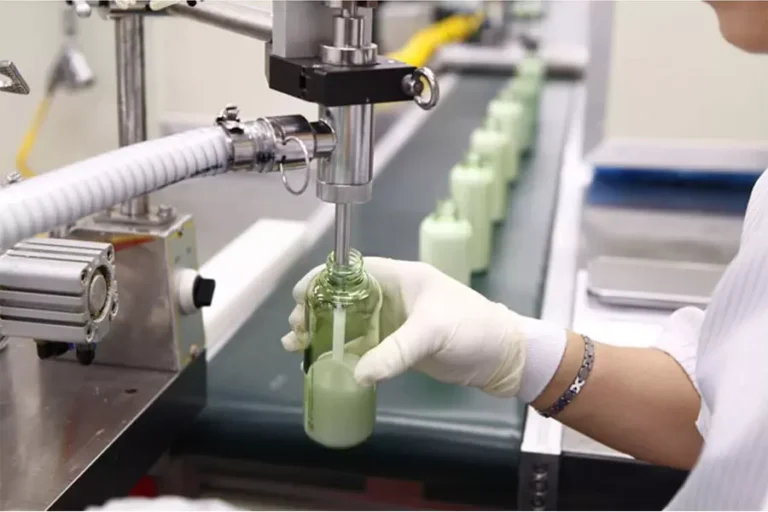
For a buyer, GMP is the floor, not the ceiling. A factory without GMP discipline can produce a lotion that looks fine on the line and turns rancid in three months because a filler was not sanitized. When you visit a plant, GMP is visible in the details: color-coded zones, logged cleaning cycles, and workers who can show you the batch record for the exact lotion you are ordering.
ISO 22716: The International Cosmetic GMP Standard
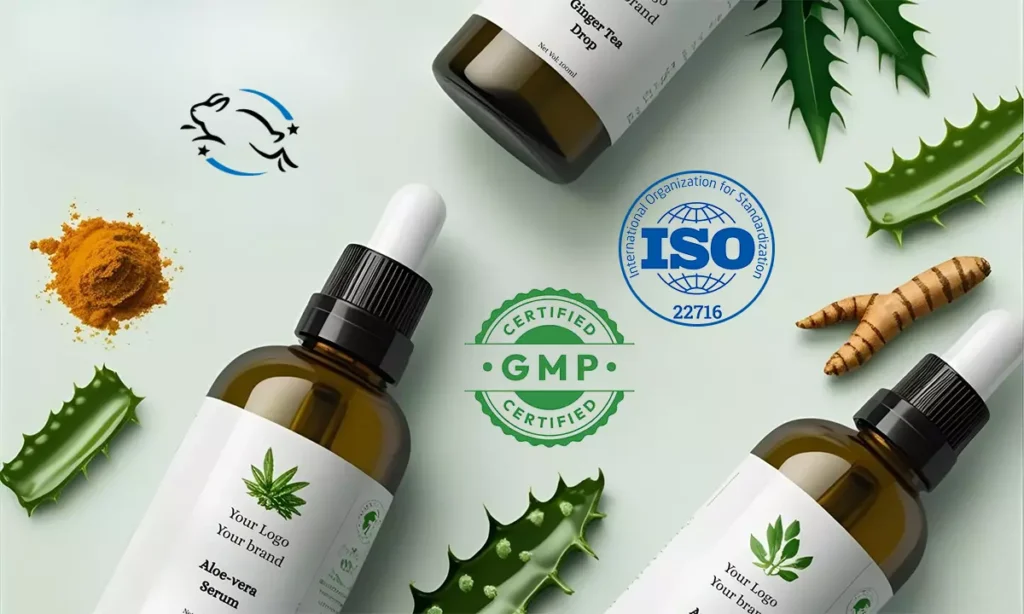
ISO 22716 is the internationally recognized Good Manufacturing Practice standard written specifically for cosmetics. Unlike a generic GMP certificate, ISO 22716 is audited by an accredited third-party certification body and focuses on the cosmetic production lifecycle: raw material receiving, storage, production, packaging, and traceability.
The practical value for you is consistency. A factory holding ISO 22716 has documented procedures for how a body lotion is emulsified, cooled, and filled, which means batch #50 should match batch #1. If your brief to your body lotion manufacturer for custom formulation specifies a viscosity and a fragrance load, ISO 22716 is the system that helps guarantee the factory can reproduce it. Ask for the audit report summary, not just the certificate, so you can see the findings and corrective actions.
USDA Organic and Ecocert / COSMOS: Proving “Natural” Claims
If your brand positions itself as organic or natural, you need a claim you can defend. USDA Organic certification applies to the agricultural ingredients in your formula and is granted by USDA-accredited agents; it is strict and usually relevant only if you make specific “organic” claims on the label. In cosmetics, many brands instead pursue Ecocert or COSMOS certification, which are cosmetic-specific standards covering natural and organic content, acceptable preservatives, and packaging sustainability.
The trap here is the gap between “contains organic shea butter” and “is an organic product.” A body lotion can contain one certified-organic ingredient and still not qualify for an organic claim. Your manufacturer should be able to tell you, per formula, exactly what percentage of content is certified and which claim that supports — and hand you the documentation to back it.
Cruelty-Free and Vegan: Ethical Claims Buyers Verify
Cruelty-free certification (Leaping Bunny, PETA’s “Beauty Without Bunnies”, or equivalent) confirms the finished product and its ingredients were not tested on animals. Vegan certification goes further and confirms no animal-derived ingredients — relevant if your lotion uses beeswax, lanolin, or collagen, which are common in moisturizing formulas.
These claims travel with you to the consumer. A retailer or marketplace can pull your listing for an unsubstantiated cruelty-free claim, so the certificate must name your specific product or your manufacturer’s relevant formula family. Confirm the scope covers the exact base you are buying.
Other Certificates Worth Checking
- FDA Facility Registration: US-bound cosmetics should originate from a facility registered with the FDA. After MoCRA, registration and product listing became explicit obligations for US market entry.
- ISO 9001: A quality management system certificate. Not cosmetic-specific, but a useful signal that the factory runs documented processes.
- Halal: Required if you sell into markets that demand it; confirms no prohibited substances and cleaned equipment.
- Social compliance (Sedex, BSCI): Relevant for brand reputation and for certain retail buyers who audit labor standards.
How to Verify a Certificate Instead of Trusting It
Certificates are easy to screenshot and hard to verify. Before you rely on any of them, run four checks:
- Issuer: Is the certifying body accredited and recognizable? A PDF from an unknown “International Cosmetic Council” is worthless.
- Scope: Does the certificate name the exact facility address where your lotion is made? A certificate for a headquarters office does not cover the production plant.
- Validity: Check the issue and expiry dates. Certificates lapse, and factories sometimes show last year’s audit.
- Product match: Does the scope include cosmetics or, better, your specific product category? A food GMP certificate is not a cosmetic GMP certificate.
Red Flags in Certification Conversations
Be cautious if a supplier sends a generic certificate with no facility address, refuses to share the audit summary, claims a single certificate covers “everything,” or cannot explain the difference between GMP and ISO 22716. None of these alone ends the relationship, but together they suggest the factory has not actually been through a real audit. Pair your document review with the body lotion manufacturer quality control and inspection process so paperwork and practice line up.
How Certifications Connect to Launch and Shelf Life
Certifications are not separate from product performance — they are the system that makes performance repeatable. A factory that holds ISO 22716 and follows GMP is the same factory most likely to pass the body lotion stability testing and shelf life protocol your market requires, because both rely on disciplined, recorded process control. When a retailer asks how you know your lotion will not separate at sixty degrees Fahrenheit in a warehouse, your answer starts with the certificate and ends with the test data.
Choosing the Right Certified Partner
For a new brand, prioritize GMP plus ISO 22716 as non-negotiable, then add cruelty-free or organic certification only if your positioning requires the claim. For a brand entering US retail, confirm FDA facility registration and MoCRA readiness before you commit to a launch date. Certifications will not sell the lotion for you, but the absence of the right ones can stop the sale before it starts.
Conclusion
A body lotion manufacturer’s certificates are a map of the risks they have already controlled for you. Read them, verify them, and match them to the claims your brand intends to make. Do that, and the certificate stops being a checkbox and becomes the foundation of a launch that actually reaches the shelf.