









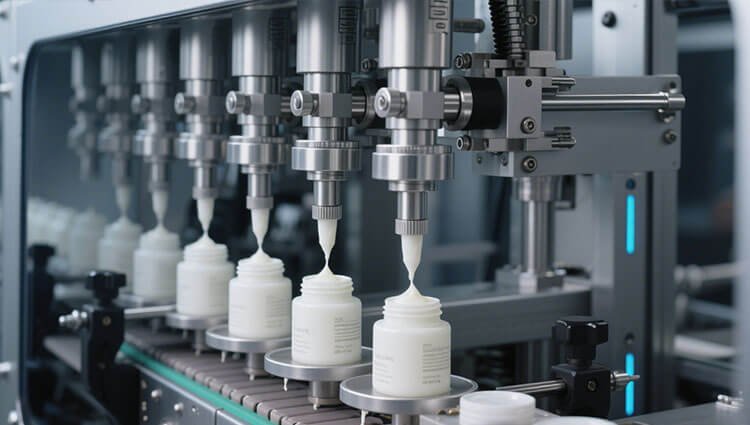
Why Scaling Is the Moment a Body Lotion Brand Either Grows or Breaks
Most private label founders obsess over the first batch and stop paying attention after the samples feel right. That is exactly backwards. The trial batch is the easy part; the hard part is reproducing that exact feel, scent, and stability when you move from 200 units to 20,000. When you scale with a body lotion manufacturer, every weakness in the formula, the documentation, or the factory’s process gets magnified by volume. A 2% batch-to-batch variance is invisible at trial and ruinous at full run. This guide walks through what actually changes as your order size grows, and how to manage it so scaling becomes a growth engine instead of a recall waiting to happen.
Why the First Trial Batch Matters More Than You Think
The trial batch is not a formality — it is your reference standard. Everything you approve at this stage becomes the benchmark the factory is contractually and practically expected to match later. Treat it as the moment to lock three things: the sensory profile (texture, absorption, after-feel), the analytical profile (pH, viscosity, preservative level, microbial limits), and the documentation (INCI, batch record, stability data). If you skip the analytical baseline at trial, you will have nothing to compare against when a full run feels “slightly off” six months later. A disciplined brief to your body lotion manufacturer at this stage saves more money than any negotiation on unit price ever will.
The Trial Batch De-Risks Everything After It
A good trial answers questions before they become expensive: Does the emulsion stay stable through a heat-cycle test? Does the fragrance survive three months on the shelf? Can the filler hit your target fill weight without foaming? Each answer turns a future risk into a known variable. Brands that rush past the trial to “save time” usually pay for it in a reformulation mid-launch, when inventory and marketing timelines are already committed.
Mapping the Path: Trial → Small Run → Full Production
Scaling is rarely a single jump. The typical arc is trial batch (for validation), small pilot run (for market testing and photography), and then full production runs sized to your sales velocity. Each step changes the economics. The thresholds where a manufacturer’s pricing and lead times shift are governed by their minimum order quantities — understand exactly where their cost curve drops, because ordering just below a tier can cost you 15–30% per unit for no reason. Ask the factory for the full price ladder across volumes, not just the MOQ quote, so you can plan reorders to land in the right band.
Don’t Let the Pilot Run Fool You
Pilot runs are often hand-made by the R&D team and look flawless. That is not proof the production line can repeat them. Insist that at least one pilot is made on, or simulated against, the actual production equipment and the same raw-material lots you will use at scale. The gap between lab bench and filling line is where most “it was fine in the sample” complaints are born.
How Lead Times and Scheduling Change at Scale
At trial, the factory fits you in whenever. At full production, you are competing for tank time, filling lines, and raw-material slots with every other client. Lead times that were two weeks can stretch to six or eight once you are a real production order. The fix is planning: share a rolling 90-day forecast with your manufacturer even if it is approximate, confirm raw-material lead times for your specific actives and packaging, and build buffer into launch dates. A manufacturer who cannot tell you their current capacity load is one you should not be scaling with.
Keeping Quality Consistent Across Larger Batches
Consistency is the silent killer of scaling brands. A customer who loves batch one and gets a different product in batch four does not write a complaint — they just stop buying. As volumes rise, protect consistency on three fronts. First, lock raw-material suppliers and insist on certificates of analysis for every critical ingredient; switching a surfactant source without re-testing is a classic cause of texture drift. Second, require that the OEM production process specs (mixing time, temperature, homogenization rate) are recorded per batch, not left to operator memory. Third, agree on a statistical inspection plan — AQL sampling, microbial release testing — applied identically to every run, not just the first.
Batch-to-Batch Verification
Keep a retained sample from every production lot and re-test a small panel (pH, viscosity, odor, microbial) at intervals. When a future complaint arrives, that archive is the difference between a one-minute answer and a week of finger-pointing. The cost of storage is trivial next to the cost of an unexplained quality drift across thousands of units.
Pricing and Cost Structure as Volume Grows
Unit economics shift in your favor as you scale, but only if you negotiate the structure, not just the headline. The manufacturing cost breakdown has several levers — raw materials, labor, filling, packaging, and overhead — and each responds differently to volume. Raw-material cost falls with committed annual volume; filling cost falls with longer, uninterrupted runs; packaging cost falls with tooling amortization and larger component orders. Ask for a cost model that shows where your per-unit price lands at 5k, 20k, and 50k units so Finance can plan. Beware a factory that offers a suspiciously low price only at MOQ and refuses to quote higher tiers — that usually signals they cannot actually supply at scale.
Documentation and Spec Control When You Scale
The more you produce, the more your specifications are the only thing standing between you and chaos. A single source-of-truth spec sheet — formula version, approved suppliers, process parameters, fill tolerances, label artwork — must travel with every order. Any change, even a fragrance supplier swap, should go through written change control and trigger re-validation if it touches the formula or preservation system. This is where the original brief to your manufacturer becomes operational: it is the contract that later purchase orders reference. Brands that keep specs in email threads discover the hard way that “the way we always do it” is not a control system.
When to Add a Second Manufacturer
There is a point where single-source risk outweighs the simplicity. If one factory outage would empty your warehouse for two months, you have scaled past safe single-sourcing. A second, qualified manufacturer is not disloyal — it is risk management, and good factories understand it. The catch is qualification: a second site must match the first’s sensory and analytical profile, which means repeating the trial-and-pilot discipline there too. Do not rush a backup online during a crisis; qualify it during calm, run parallel batches, and keep it warm with periodic small orders so its line memory stays current.
A Practical Scaling Checklist
Before you commit to a full production run, confirm these:
- Reference standard locked. Trial batch analytical profile documented and agreed as the benchmark.
- Volume price ladder obtained. Quotes at your real reorder quantities, not just MOQ.
- Raw-material suppliers fixed. COAs on file; no silent substitutions allowed.
- Process parameters recorded per batch. Not dependent on a single operator’s memory.
- Inspection plan agreed. AQL level and microbial release applied to every lot.
- Retained samples archived. Every lot kept for comparison and complaint resolution.
- Spec sheet is the contract. Version-controlled and referenced by every PO.
- Capacity confirmed. Factory can meet your 90-day forecast with buffer.
- Change control in writing. Any formula or supplier change triggers re-validation.
- Exit and backup plan. Second qualified source identified before you need it.
Bottom Line
Scaling with a body lotion manufacturer is less about getting more product and more about getting the same product, repeatedly, at higher volume and lower unit cost. The brands that scale cleanly are the ones that treated the trial batch as a standard, wrote down their specs, verified consistency at every step, and planned lead times instead of hoping. Choose a manufacturing partner who is as disciplined about documentation as they are about formulation, and scaling stops being scary — it becomes the most reliable growth lever you have.