






Why Label Claims Are a Buying Decision, Not a Marketing Afterthought
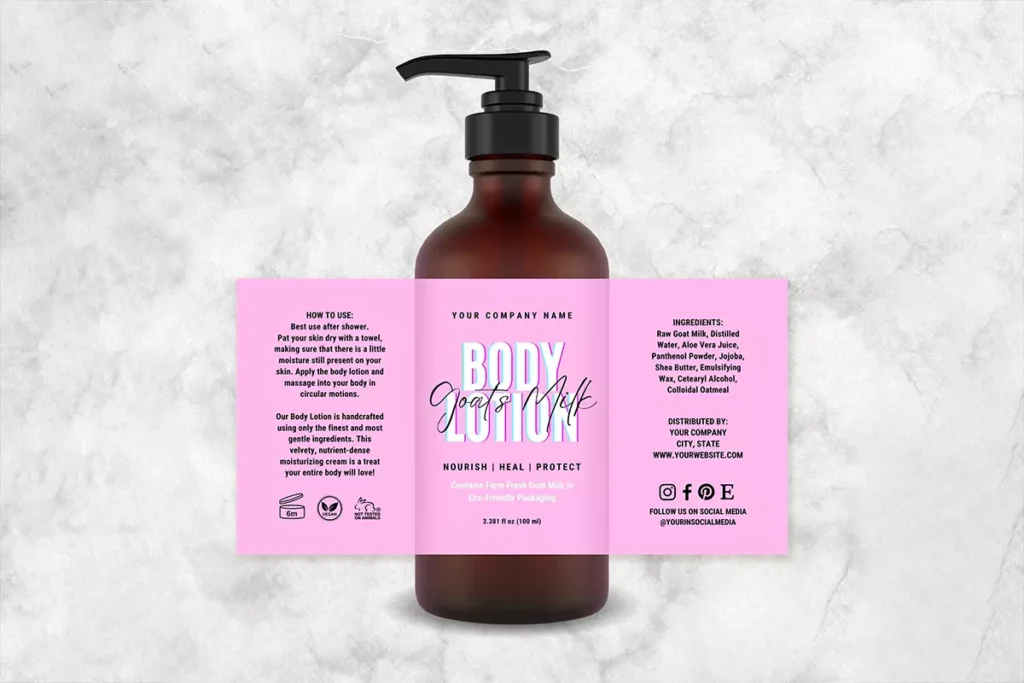
When you brief a body lotion manufacturer, the conversation eventually reaches the label — and that is where most private label launches either gain credibility or quietly break the law. A claim like “clinically proven” or “organic” is not a creative choice; it is a regulatory commitment that your manufacturer must be able to support with data, documentation, or formulation reality. Choosing a factory that understands claim substantiation up front protects you from customs rejections, marketplace takedowns, and consumer-protection complaints later.
The Categories of Claims and What Each Requires
Cosmetic claims fall into a few buckets, and each carries a different burden of proof.
Ingredient and Composition Claims
“Contains shea butter,” “sulfate-free,” or “paraben-free” describe the formula itself. These are the easiest to defend because they are verifiable from the batch record and the INCI list. A trustworthy manufacturer keeps a clean formulation sheet and can confirm every ingredient claim against the actual batch. Be wary of vague composition language like “naturally derived” without a defined percentage — regulators increasingly expect a quantified basis.
Functional and Performance Claims
“24-hour moisturization,” “improves skin barrier,” or “reduces dryness in 7 days” assert a measurable effect on the skin. In the United States, such claims can cross from cosmetic into drug territory if they imply treatment of a condition, and even within cosmetics they require substantiation — typically instrumental testing (corneometry for hydration, tewl for barrier) or a consumer-use study. A capable private label body lotion partner will tell you which performance claims their existing data already supports and which would need a new study.
Certification and Standard Claims
“USDA Organic,” “Cruelty-Free,” “Vegan,” or “EWG-verified” reference an external standard. These are not self-declared; they require certification, audited supply chains, and often a registration fee. The factory’s role is to supply certified raw materials with paper trails and to keep the production line free of cross-contamination that would void the claim. Our stability and shelf-life testing guide covers the documentation side; certification claims add a supplier-audit layer on top.
Origin and Process Claims
“Made in China,” “small-batch,” or “cold-processed” describe where and how the product was made. These are supported by the manufacturer’s records — production logs, facility certificates, and traceability. Working with a verified real factory rather than a trading company matters here, because only the actual producer can vouch for process claims with evidence.
What the Law Actually Requires
In the U.S., the FDA regulates cosmetics under the Federal Food, Drug, and Cosmetic Act as amended by MoCRA. The baseline is simple but non-negotiable: a cosmetic label must be truthful, not misleading, and the responsible person must hold adequate substantiation for any claim before the product is marketed. MoCRA also introduced facility registration and product listing requirements that your manufacturer’s documentation supports. In the EU and UK, the stricter framework requires a Cosmetic Product Safety Report and a designated responsible person before launch. Retailers and marketplaces (Amazon chief among them) layer on their own claim policies, and they will suspend a listing faster than a regulator will send a letter.
How Your Manufacturer Supports Compliant Claims
A factory is not just a mixer; for claim compliance it is your evidence partner. The support shows up in four places:
- Formulation transparency. A complete, current INCI list and batch formula lets you defend every composition claim and avoid accidental prohibited ingredients.
- Testing data. Stability, microbial, and where relevant, efficacy or instrumental studies provide the substantiation file. This is where in-process and pre-shipment quality control pays off beyond defect prevention.
- Supplier documentation. Certificates of analysis and organic or cruelty-free certificates for raw materials close the chain from claim to source.
- Label review. Experienced manufacturers flag claims that would push a product into drug classification or that they cannot substantiate, saving you from a costly relabel.
Claims That Get Brands Into Trouble
A few patterns cause most of the problems we see. “Clinically proven” without a study is the classic; if you have not run a clinical trial, do not use it. “Hypoallergenic” is loosely regulated but still expected to mean something — back it with low-irritation testing or drop it. “Natural” and “clean” are not defined terms and are under active scrutiny; pair them with specific, quantifiable language. “FDA-approved” is almost always wrong for cosmetics — the FDA does not approve cosmetics or their labels, only registers facilities and lists products under MoCRA. A manufacturer that lets you print “FDA-approved” on a cosmetic is signaling carelessness you will pay for.
Building Claim Support Into the Brief
The cheapest time to make a claim compliant is before the first batch, not after a takedown. Tell your manufacturer which claims you intend to use at the briefing stage, not after formulation is locked. That lets them select substantiable actives, run the right tests during stability validation, and reserve the certificates you will need. It also clarifies formula ownership and IP — who holds the substantiation data matters if you later switch factories.
A Practical Claim Vetting Checklist
Before any claim goes on a label, ask four questions. First, what evidence supports it, and is that evidence on file? Second, does the claim imply a drug benefit that would trigger stricter regulation? Third, can the raw material certificates back up any certification claim? Fourth, would a competitor or regulator easily challenge it? If any answer is “no” or “I don’t know,” the claim is not ready. This discipline is tedious but it is what separates a brand that scales from one that gets pulled.
Regional Differences You Cannot Ignore
Claim rules are not global, and a label that is fine in one market can be illegal in another. The U.S. MoCRA framework is comparatively permissive on cosmetic claims but strict on facility registration and safety substantiation. The EU’s approach is precautionary: “organic” and “natural” are governed by private standards with legal backing, and any efficacy claim must be supported by a dossier reviewed under the cosmetic regulation. Canada and Australia sit between. If you plan to sell the same private label body lotion across regions, brief your manufacturer on the strictest applicable market first and localize the label per region rather than assuming one label fits all. A factory with export experience will already keep claim templates aligned to multiple frameworks and can flag the conflicts before printing.
Claims and Marketplace Suspensions
Amazon, and to a lesser degree other marketplaces, enforce claim policies that sometimes exceed regulatory minimums. “Antimicrobial,” “sterilizing,” or “prevents infection” language on a cosmetic body lotion is a fast track to a listing removal, because it implies a drug use. Even “dermatologist tested” can trigger a request for the test protocol. The practical move is to keep your marketplace copy claim-light and defensible, route stronger performance language to your own branded site where you control the substantiation context, and make sure your manufacturer’s documentation can answer any information request within the marketplace’s response window. Speed of response matters as much as the claim itself.
Bottom Line
Label claims are a manufacturing decision as much as a marketing one. The right body lotion manufacturer does not just make the formula — they hand you the substantiation file that lets you say what you want to say, legally and defensibly. Brief your claims early, demand the documentation, and treat any factory that shrugs off claim support as a liability on your label. In a category where trust is the product, compliant claims are the cheapest insurance you can buy.