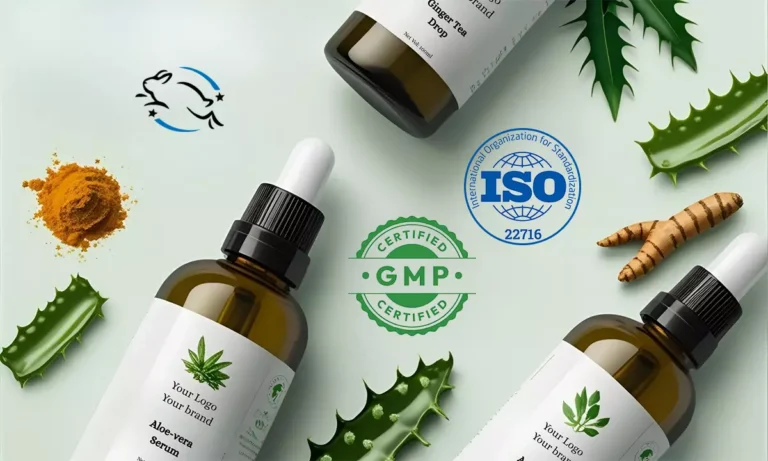



Ethical certifications like Leaping Bunny signal no animal testing and can boost brand trust, open conscious retail channels, and justify a premium price. But “cruelty-free” and “vegan” are not the same claim, and the certifications behind them vary widely in rigor, cost, and timeline. This guide compares the three labels most U.S. body care brands pursue, Leaping Bunny, PETA, and The Vegan Society, with the real fees, lead times, and manufacturer documentation you need before you apply.
What “Cruelty-Free” and “Vegan” Actually Certify
These terms are often used together but certify different things. Cruelty-free means no animal testing was performed on the finished product or its ingredients at any stage. Vegan means the formula contains no animal-derived ingredients (no beeswax, lanolin, honey, carmine, or animal glycerol). A product can be cruelty-free but not vegan (it contains beeswax), and theoretically vegan but not cruelty-free (plant formula tested on animals). Your body lotion manufacturer must support both halves with paperwork, which is why choosing a GMP-certified partner with controlled supply chains matters as much as the logo itself.
The Major Certifications
Leaping Bunny (Cruelty Free International)
Leaping Bunny is the most recognized no-animal-testing standard in North America. It requires a fixed cut-off date policy: you and your suppliers commit to no animal testing after a specified date, and you must monitor suppliers annually. It covers the full supply chain, not just the finished good.
- Cost: application and annual fees typically run about $1,000 to $5,000+ depending on company size and whether you join via a trade association.
- Timeline: 3-6 months including supplier surveys and documentation.
- Best for: brands targeting premium retail and conscious consumers who recognize the bunny logo.
PETA “Beauty Without Bunnies”
PETA offers a free-to-join listing for companies that pledge no animal testing, plus a paid “Global Animal Test-Free” license that lets you use the logo. It is faster and less expensive but relies more on company attestation than on deep supplier auditing.
- Cost: free to list; paid logo license is a few hundred dollars per year.
- Timeline: often approved within weeks after the signed statement.
- Best for: startups that want a recognizable cruelty-free marker quickly while building toward Leaping Bunny.
The Vegan Society (Vegan Trademark)
The Vegan Society’s Vegan Trademark certifies both no animal ingredients and no animal testing, making it the strongest single “vegan” mark. It requires a full ingredient dossier and ongoing annual renewal.
- Cost: a one-time registration plus an annual fee scaled to turnover, commonly roughly £100 to £400+ per year for small brands, rising with revenue.
- Timeline: typically 4-8 weeks once the dossier is complete.
- Best for: brands whose core claim is vegan and who want a globally respected mark.
Costs and Timelines at a Glance
- Fastest, cheapest: PETA listing (weeks, free to list).
- Strongest cruelty-free: Leaping Bunny (3-6 months, $1k-$5k+).
- Strongest vegan: Vegan Society (4-8 weeks, £100-£400+/yr).
- Combined program: Leaping Bunny plus Vegan Society is the gold standard for an ethical body lotion brand, but budget 6+ months and several thousand dollars all-in.
What Your Manufacturer Must Provide
No certifier will take your word alone. Expect to supply:
- Full INCI ingredient list with supplier names.
- Supplier declarations confirming no animal testing and, for vegan, no animal-derived material.
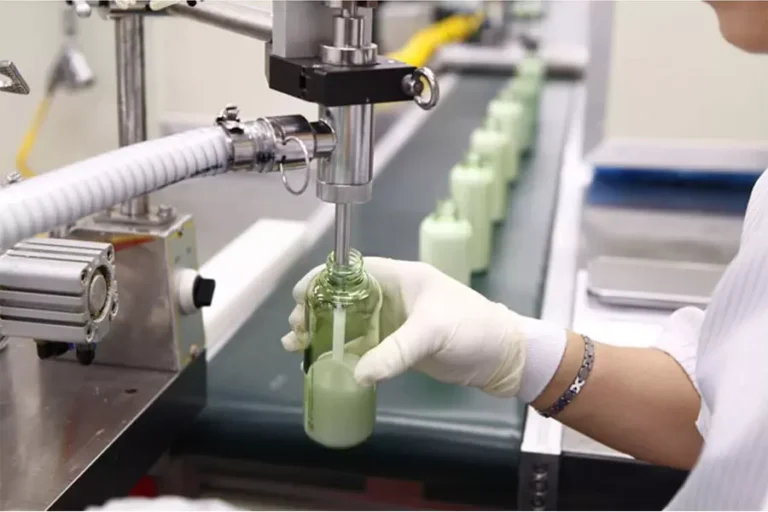
- GMP documentation such as ISO 22716 records proving batch traceability.
- Formula and packaging component dossiers (some pigments or glues are animal-derived).
A manufacturer without disciplined documentation will stall your application for months. Align with one early, before you promise a certified product in your launch plan.
Certifications and Retail Buyers
The logo you need depends on where you sell. Amazon’s “Compact by Design” and “Climate Pledge Friendly” programs accept certain cruelty-free and vegan marks. Some U.S. drug chains and specialty retailers maintain their own accepted-logo lists, and the EU’s marketing rules effectively bar “cruelty-free” claims unless backed by recognized certification. Confirm the target retailer’s accepted marks before you apply, because earning the wrong logo wastes both time and fee. This is also where FDA compliance for skincare brands overlaps: baseline safety substantiation is expected regardless of the ethical mark.
What Certification Really Costs in Margin
Note that certification also reduces risk: a verified cruelty-free status protects you if a retailer audits your supply chain, which is a hidden saving most brands forget to count. Beyond the fees, certification carries ongoing product costs: vegan-certified raw materials often cost 5-15% more than conventional equivalents, and Leaping Bunny documentation is real internal labor every year. Model this into your price before you commit, because an ethical claim that forces a price 30% above competitors may not pay back in volume. The brands that win treat certification as a positioning investment with a measured ROI: they track whether the logo lifts conversion enough to cover the premium. If your margin model shows the cert pays for itself within the first two quarters, pursue it aggressively; if not, start with the free PETA listing and upgrade once scale absorbs the cost. Either way, decide with numbers, not emotion, so the ethical stance strengthens the business instead of straining it. This margin discipline is exactly why many founders start with stock packaging and a single certifying logo, then expand the ethical program as revenue grows and the premium becomes affordable.
Common Pitfalls
- Assuming vegan equals cruelty-free. It does not; certify both if you claim both.
- Retail mismatch. Some U.S. chains and the EU market require specific logos; confirm the target retailer’s accepted marks before applying.
- Expired monitoring. Leaping Bunny requires annual supplier re-confirmation; lapsing it costs the logo.
- Hidden animal inputs. Caps, adhesives, and pigments sometimes contain animal derivatives that fail vegan audits.
Step-by-Step to Certification
- Decide which claims you must make (cruelty-free, vegan, or both).
- Ask your manufacturer for supplier declarations and GMP records up front.
- Start with PETA for speed, then file Leaping Bunny and Vegan Society in parallel.
- Build the ingredient dossier with INCI names and sources.
- Submit, pay fees, and schedule annual re-confirmation reminders.
Keeping Certification Year Over Year
Certification is not a one-time project. Leaping Bunny requires an annual supplier re-survey, and the Vegan Society renews yearly against turnover. Build a calendar with owners and reminders, and re-pull supplier declarations every time you change an ingredient or a packaging component, because a single new uncertified pump can void your vegan status. Treat the paperwork as part of routine quality management rather than a fire drill each renewal.
A Certification Checklist
- Claim defined: cruelty-free, vegan, or both.
- Manufacturer GMP and supplier declarations in hand.
- Budget set: $1k-$5k+ and 3-6 months for Leaping Bunny; £100-£400+/yr for Vegan Society.
- Target retailers’ accepted logos confirmed.
- Annual monitoring calendar created.
The ethical shift is now mainstream; our article on the rise of clean beauty shows why these certifications are becoming table stakes rather than differentiators.
Partner With a Manufacturer Ready for Audit
Qianlan is a GMP-certified body lotion manufacturer with the traceable supply chain and documentation needed to support Leaping Bunny and Vegan Society applications. Contact our team for a free consultation and quotation.