








Body lotion is never simply “natural” or “synthetic.” The most successful private label and OEM launches treat the two as a toolkit, not a flag to wave. A body lotion manufacturer that understands when to reach for a plant-derived butter and when to reach for a lab-made emollient will give your brand a more stable, safer, and more marketable product than either purist extreme. This guide breaks down what the terms actually mean on a formula sheet, where each category wins, where it fails, and how to brief a manufacturer so you get the blend your positioning promises instead of a generic compromise.
What “Natural” and “Synthetic” Mean on a Formula Sheet
In cosmetics, “natural” usually refers to ingredients derived from plants, minerals, or fermentation with minimal chemical modification: shea butter, sunflower seed oil, plant glycerin, aloe, oat extract. “Synthetic” refers to ingredients made or heavily modified through industrial chemistry: certain silicones, specialized esters, lab-produced preservatives, and many humectants such as sodium PCA. The line is blurrier than marketing suggests. Glycerin can be plant- or petroleum-derived, and “naturally sourced” vitamin E is often chemically identical to synthetic tocopherol. For a founder, the practical question is not “natural good, synthetic bad,” but “which ingredient delivers the performance, safety, and shelf life my customers will actually experience?”
The Real Trade-Offs
Where Natural Ingredients Win
- Marketing resonance. “Shea butter” and “oat extract” read as trustworthy on a label and support clean-beauty storytelling.
- Skin feel. Natural butters and oils give rich, recognizable emollience that many consumers associate with real moisturization.
- Renewable sourcing. Plant-derived materials can support sustainability claims when they are traceably sourced.
Where Natural Ingredients Fall Short
- Batch variability. A natural oil’s composition shifts with crop, climate, and supplier, complicating reproducibility.
- Shorter stability. Unsaturated natural oils oxidize and turn rancid faster, limiting shelf life without robust antioxidants.
- Cost volatility. Shea and cocoa butter prices swing with harvests; a 2022-2023 spike moved some supplier quotes 20-35% quarter to quarter.
- Allergen load. Botanical extracts carry proteins and fragrance compounds that trigger sensitivities more often than purified synthetics.
Where Synthetic Ingredients Win
- Consistency. A synthetic ester is identical batch to batch, simplifying QC and claim substantiation.
- Stability. Many synthetics resist oxidation and extend usable shelf life to 24-36 months.
- Targeted performance. Dimethicone, synthetic ceramides, and engineered esters can deliver slip, barrier repair, or a matte finish that naturals cannot match.
Where Synthetics Fall Short
- Perception risk. “Dimethicone” or “PEG” on a label can read as “chemical” to clean-beauty shoppers, hurting trust.
- Regulatory scrutiny. Some synthetics face restriction debates, such as certain preservation systems in the EU, requiring active monitoring.
Preservation Is Non-Negotiable Either Way
A common myth is that “natural” lotion needs no preservative. Any water-based formula, natural or not, is a microbial growth medium. Brands that skip or under-dose preservation face spoilage, recalls, and liability. The realistic options are broad-spectrum synthetic preservatives (phenoxyethanol, ethylhexylglycerin) or “preservative-free by design” approaches using hurdle technology: low water activity, high glycerin, and airless packaging. The latter is harder to validate and usually costs more. Brief your manufacturer explicitly on the preservation system you will stand behind, because it affects both safety and your clean-beauty claims. For deeper reading on ingredient selection, see our guide to top body lotion ingredients for dry skin.
Cost and Stability Implications for Your P&L
A formula that is roughly 70% natural typically costs 10-25% more per kilogram than a conventional equivalent once you add antioxidants and a stronger preservation buffer to compensate for natural-oil instability. It may also need an 18-month rather than 30-month shelf life, which changes your inventory math. A synthetic-leaning formula is cheaper and longer-lived but weaker on shelf appeal. Most winning mid-market brands land at 40-60% naturally derived content: enough for credible claims without blowing margin or stability. Build this target into your costing model before you negotiate price, because every point of natural content has a measurable cost and a measurable claim value.
A Worked Example: A 50% Naturally Derived Daily Lotion
Consider a daily body lotion priced at $18 retail. At 50% natural content the formula might include sunflower oil, shea butter, and oat extract for feel and story, balanced with synthetic esters and a validated preservative for stability. The natural inputs add about $0.30 per unit versus a fully synthetic base, but they lift perceived value enough to support the price. The manufacturer locks two approved shea suppliers so batch color and scent stay consistent, and runs challenge testing on every campaign. This is the kind of pragmatic blend that survives contact with real production and real customers.
When to Lean Fully Natural or Fully Synthetic
Neither extreme is wrong for every brand. A fully natural lotion makes sense when your entire positioning is “farm to skin” and your margin absorbs the cost and shorter shelf life, provided you invest in antioxidants and airless packaging. A fully synthetic lotion makes sense for a clinical, fragrance-free, sensitivity brand where consistency and a 30-month shelf life matter more than botanical storytelling. Most brands sit between, and the job of your briefing is to name that position precisely rather than hope the factory guesses it.
How to Read a Supplier Spec Sheet
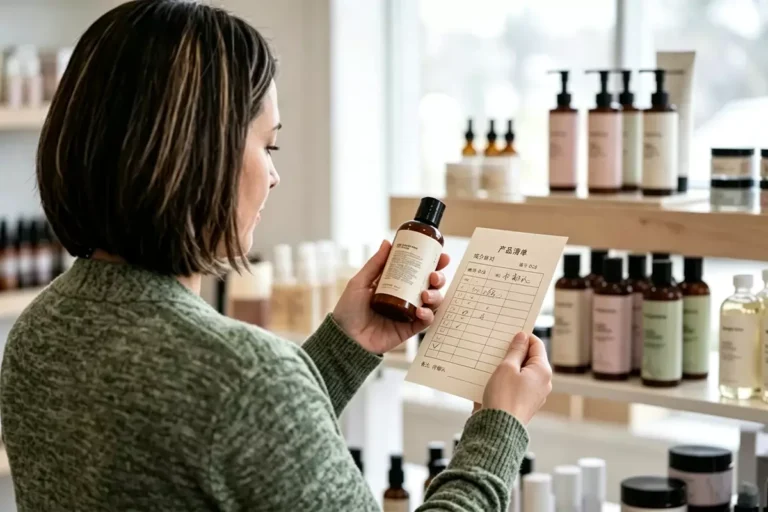
When your manufacturer returns a specification, the lines that matter most are the INCI order (ingredients listed highest concentration first), the named preservative system, and the natural-content percentage if you claimed one. Check that the natural oils you briefed actually appear and in the position you expect: a “natural” claim with shea buried near the bottom of the list means the formula is mostly synthetic despite the marketing. Confirm the preservative is on your approved list and that the finished pH supports any actives like hyaluronic acid. A disciplined spec sheet is also your first line of defense against a formula silently changing between batches, which is the quiet killer of brand consistency and the fastest way to lose repeat customers who notice the difference.
Ask for the spec to be version-controlled. Every change, even a swap to a second approved shea supplier, should trigger a new version number and a fresh Certificate of Analysis. Treat the specification as a contract rather than a suggestion, and your natural-versus-synthetic strategy will survive contact with real production runs instead of collapsing into an inconsistent product.
How to Brief Your Manufacturer
- Define the claim. “Naturally derived,” “clean,” and “vegan” are different promises. State which you must make.
- Set a natural-content target as a percentage, not a vague intent.
- Specify forbidden lists (for example, no parabens, no sulfates) so R&D works within boundaries.
- Agree on challenge testing and stability protocols before pilot batches.
- Lock the supplier. Name approved natural-oil suppliers to control batch variability.
If you are deciding between a ready formula and a bespoke blend, our comparison of custom formulation vs stock formula walks through the trade-offs in time and cost.
A Practical Sourcing Checklist
- State the naturally derived percentage target in writing.
- Require a Certificate of Analysis (CoA) and botanical species ID for each natural oil.
- Confirm the preservative system and challenge-test result.
- Request three pilot batches across two natural-oil lots to prove reproducibility.
- Validate shelf life with real-time and accelerated data, not a supplier promise.
The clean-beauty shift is reshaping these choices quickly; our write-up on the rise of clean beauty covers where consumer demand is heading so you can brief your manufacturer ahead of it.
Work With a Manufacturer Who Balances Both
Qianlan provides custom body lotion formulation and manufacturing across the full natural-to-synthetic spectrum. Tell us your claim, your margin, and your shelf-life target, and we will build a stable, compliant, marketable formula. Contact our team for a free consultation and quotation.