







When you partner with a body lotion manufacturer for a private label program, the formula is not a fixed black box. A competent contract manufacturer gives you a palette of decisions — color, scent, texture and the active ingredients that define what the product actually does for the skin. The brands that win on shelf are usually the ones that treated those decisions as product strategy, not afterthoughts.
This guide walks through exactly what you can specify when developing a custom body lotion, how each choice affects cost and lead time, and the documentation you should expect before you commit to a production run.
1. Start With a Written Product Brief
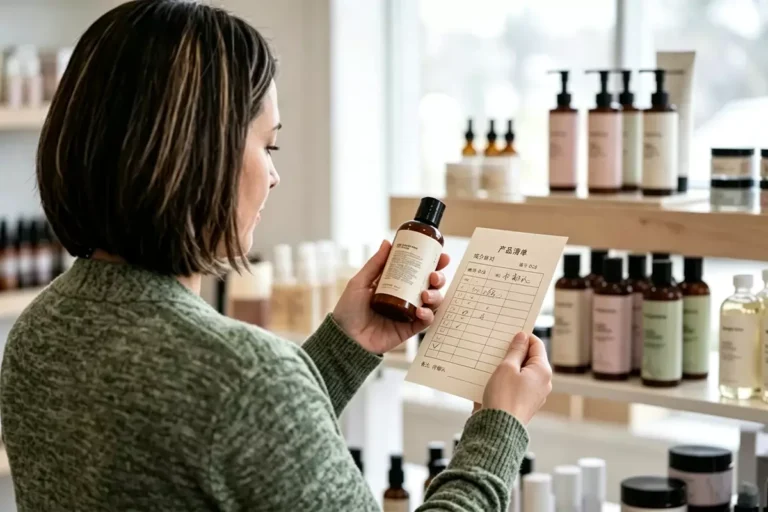
Every serious customization project begins with a specification sheet. If you have not done this before, our detailed walkthrough on how to brief your body lotion manufacturer for custom formulation covers the exact fields a developer needs: target skin type, claims, texture, pH window, regulatory market, and the sensory profile you are aiming for.
A clear brief is what lets a manufacturer turn “I want something premium” into a reproducible formula. Without it, you will burn pilot batches guessing.
2. Color Customization: More Than a Pantone Swatch
Most body lotions are white or a very light tint, but color is still a brand signal — think the soft apricot of a vitamin-C lotion or the green cast of a botanical formula. Color is introduced through approved cosmetic pigments or water-soluble dyes dispersed in the oil or water phase.
What you should specify:
- Target shade — provide a physical reference or a Pantone/CIMS number; the lab will match within tolerance.
- Stability of color — pigment systems must hold through accelerated stability testing (see our notes on custom formulation vs stock formula approaches). Some natural extracts that tint the batch will fade or shift over the claimed shelf life.
- Batch-to-batch consistency — agree a color tolerance up front so your second and twentieth production lots look identical.
Remember that color interacts with the packaging: a clear bottle will show shade drift far more obviously than an opaque or amber one.
3. Fragrance: From Fragrance-Free to a Signature Scent
Fragrance is the single biggest driver of perceived “premium” feel, and the most common source of launch delays when it is handled loosely. You generally have four routes:
| Route | Best for | Lead time | Risk |
|---|---|---|---|
| Fragrance-free | Sensitive-skin, eczema, baby | Shortest | Low; easiest to substantiate claims |
| Stock fragrance oil | Fast launch, lower cost | Short | May smell “generic” |
| Custom fragrance brief | Differentiated brand | Medium | Needs IFRA + allergen docs |
| Signature bespoke scent | Hero product | Longest | Highest cost, exclusivity possible |
If you use any added scent, insist on IFRA conformity documentation and an allergen label assessment for the EU and other regulated markets. A reputable body lotion manufacturer will supply the fragrance house’s IFRA certificate and calculate the in-formula usage level for you.
4. Active Ingredients: What the Product Actually Does
“Active” here means the functional skincare ingredients beyond the base emollient system. The most requested actives in private label body lotion today include:
- Glycerin and hyaluronic acid — humectants that draw moisture into the upper skin layers; the backbone of “hydrating” claims.
- Ceramides and cholesterol — barrier-repair actives for compromised or dry skin.
- Niacinamide (vitamin B3) — supports even tone and barrier function; needs stable pH and compatible preservative.
- Shea butter and plant oils — emollients that improve feel and “natural” positioning.
- Urea or lactic acid — gentle keratolytic actives for very dry, rough skin.
Two cautions. First, every active has a minimum effective concentration and a maximum safe concentration — your manufacturer should be able to cite both. Second, actives change the preservative challenge: a formula rich in humectants and botanicals is a better food source for microbes, so preservative efficacy testing becomes non-negotiable (covered in our stability and shelf-life guide).
5. Custom Formulation vs Stock Formula
A key early decision is whether to adapt an existing stock base or build from scratch. Our comparison of custom formulation vs stock formula breaks down the trade-offs: stock bases are faster and cheaper but limit how unique the product feels, while full custom development protects differentiation and lets you own the spec.
For most new brands, a hybrid works best — start on a proven base, customize color, fragrance and one or two actives, then move to a fully bespoke formula once the line proves itself.
6. Texture and Viscosity
Texture is where consumers form an opinion in the first three seconds. You can specify:
- Viscosity / spreadability — light lotion vs rich cream, measured on a viscometer and agreed as a range.
- After-feel — matte, satin or dewy; tacky residues are the most common complaint and are entirely controllable through emulsifier choice.
- Absorption speed — relevant for “fast-absorbing” claims.
Texture targets should be written into the brief and verified on the golden sample, not assumed.
7. The Documentation That Proves It Works
Before you sign off on mass production, your manufacturer should hand you:
- A Certificate of Analysis (CoA) per batch covering pH, viscosity, appearance and microbial limits.
- A stability report showing the formula held color, pH and texture across the claimed shelf life.
- Preservative efficacy (PET) or challenge-test results.
- IFRA and allergen documentation for any fragrance.
- A full ingredient list (INCI) formatted for your target market’s labeling rules.
These documents are not bureaucracy — they are what protect you if a retailer, platform or regulator asks how you substantiate a claim.
8. Working Effectively With Your Manufacturer
The fastest, lowest-risk custom programs share one trait: the brand treats the body lotion manufacturer as a development partner from day one. Share the commercial goal (price point, channel, claims), not just a wish list. That context lets the lab steer you toward actives and formats that are stable, registerable and profitable at your target cost.
9. Regulatory and Claim Considerations When Customizing
Customization widens your claim opportunities but also your compliance surface. A “hydrating” claim is low risk; a “reduces eczema” or “antibacterial” claim can trip higher evidence standards and, in some markets, drug-category regulation. Align the active ingredient and the claim with your target market’s rules during the brief stage — reworking a formula to drop a claim you cannot support wastes a full pilot cycle. A transparent body lotion manufacturer will flag over-claimed language at the brief stage rather than after submission.
Also confirm that any novel ingredient is approved in your launch markets and that the INCI name and concentration will print correctly on the label. These details are easy to miss and expensive to fix once the first production lot is filled.
Frequently Asked Questions
Can I specify a completely fragrance-free lotion?
Yes. Fragrance-free is the simplest route and the easiest to substantiate for sensitive-skin claims. Just confirm the base emollients themselves are low-odor.
How many pilot batches should I expect before sign-off?
Typically two to three: an initial match, a refined golden sample, and a confirmatory batch. Rushing past this stage is the most common cause of post-launch rework.
Who owns the formula if I commission custom development?
Ownership is contractual. Exclusivity and IP assignment should be agreed in writing before development begins — do not assume custom work is automatically yours.
Conclusion
Customizing a private label body lotion is a series of concrete, specifiable decisions: color, fragrance, actives, texture and the documentation that proves stability. Approach them with a written brief and a development partner mindset, and you turn a commodity white-label product into a differentiated brand asset.