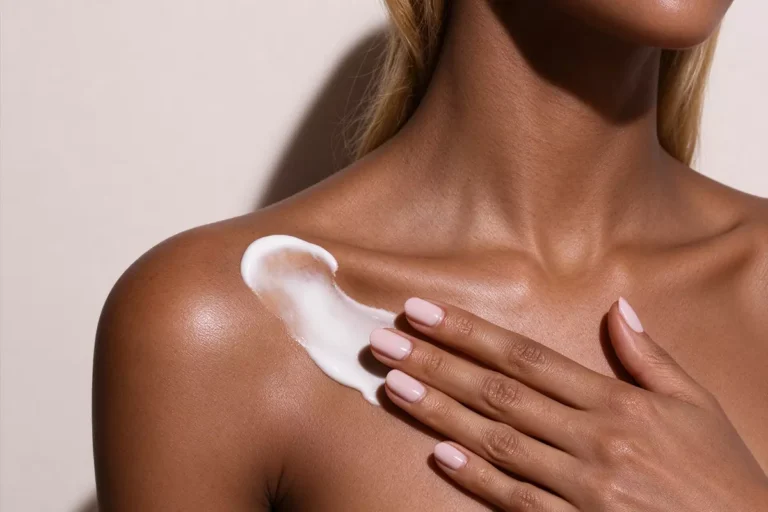










Oily and combination skin is one of the most common skin profiles among adult body-lotion buyers, yet it is also the segment most poorly served by generic “rich, nourishing” formulas. If you brief a factory for a heavy cream, oily-skin customers get clogged pores and a greasy film; if you brief for “light,” you can easily end up with a watery lotion that loses the skin in an hour. The partner who turns that narrow brief into a sellable product is your body lotion manufacturer. This guide explains what an oily and combination-skin lotion actually needs, how to write a brief your factory can execute, and which specification decisions protect the launch.
Why Oily and Combination Skin Needs a Different Formula
Oily skin over-produces sebum, and combination skin carries an oily T-zone (chest, upper back, shoulders) alongside normal or dry extremities. The goal is not to “strip” oil — aggressive cleansing and matte products trigger rebound sebum and irritation. The goal is to balance: hydrate without adding occlusive weight, support the barrier, and keep the finish light and non-comedogenic so pores stay clear.
A dry-skin brief leans on occlusives and heavy emollients. An oily-skin brief does the opposite: it favors oil-in-water emulsions, low oil loads, lightweight esters, and sometimes mattifying powders. The difference is entirely in the brief, and a skilled body lotion manufacturer will tell you when a requested texture is chemically unrealistic.
The Three-Class Ingredient Logic, Rebalanced
Use the same vocabulary as every other brief, but reweight it:
| Role | Oily/combination target | Preferred ingredients |
|---|---|---|
| Humectants | Carry most of the water-weight; draw moisture without grease | Glycerin, sodium PCA, panthenol, low-dose hyaluronic acid, urea (2–5%) |
| Emollients | Light, fast-spreading; avoid heavy butters | Squalane, jojoba oil, grapeseed oil, caprylic/capric triglyceride, isoamyl laurate |
| Occlusives | Minimal; just enough to prevent tightness | Dimethicone (low %), small amounts of squalane; avoid petrolatum/pure waxes |
| Mattifiers | Optional, for a powder-dry finish | Silica, nylon-12, starch derivatives |
The single most common failure is copying a normal-skin formula and calling it “light.” Buyers with oily skin feel the difference in seconds. Ask the lab to target a lower viscosity and a non-greasy after-feel, then confirm it with samples rather than trusting the description.
Actives That Add Real Value for Oily Skin
Oily and combination skin responds well to a few targeted actives that also support a “clarifying” positioning:
- Niacinamide (vitamin B3, 2–5%). Helps regulate sebum appearance, supports barrier function, and is well tolerated — a near-universal pick for this profile.
- Salicylic acid (BHA, 0.5–2%). Lipid-soluble, so it reaches inside pores; helps keep them clear. Keep it low and disclose it; it also nudges the product toward a body-acne story.
- Zinc PCA. Supports sebum balance and has a mild soothing effect, useful for chest and back areas.
- Centella asiatica (cica) or panthenol. Calm the rebound irritation that harsh “oil-control” products cause.
Avoid piling on actives. A clean niacinamide + light BHA + panthenol stack is more defensible and marketable than a 10-ingredient “detox” claim that invites scrutiny. Let your manufacturer’s documentation back every claim on the label.
Texture and Viscosity Specification
For an oily-skin lotion, specify a lighter viscosity than a normal-skin product — for example, 3,000–7,000 cP at room temperature — with an after-feel target such as “absorbs in under 30 seconds, no film, no tack, matte-to-soft finish.” Request samples at two or three viscosity points so you can choose the one that feels premium rather than slippery. If your range also includes a body lotion for sensitive skin, keep the oily variant distinct: the sensitive version minimizes fragrance and essential oils, while the oily version can carry a light, fresh scent and a slightly higher active load.
Fragrance and Sensitivity Trade-offs
Oily and acne-prone skin is often also reactivity-prone, so fragrance choice matters. Two practical rules:
- Prefer low-dose, allergen-disclosed fragrance or a clearly labeled fragrance-free variant for the core SKU.
- Avoid known irritants (high menthol, strong essential-oil blends) that can trigger the very irritation you are trying to prevent.
A “fragrance-free but feels clean” positioning is a strong seller in this segment and reduces your regulatory exposure.
Packaging Decisions
Oily-skin lotions are usually lighter and less active-heavy than dry-skin products, which simplifies packaging:
- Pump or tube formats suit a light lotion and reduce contamination versus open jars.
- Opaque or tinted bottles are still wise if you include vitamin E or plant extracts that degrade in light.
- Airless pumps are optional here (actives are typically stable), so you can save cost versus a premium dry-skin line.
Decide packaging early because custom molds carry the longest lead time in the project, and a launch delayed by a bottle misses the warm-weather selling season when oily-skin demand peaks.
An Oily-Skin Brief Specification Template
Hand your manufacturer a written spec rather than a paragraph of wishes. A workable oily-skin brief includes:
| Field | Example target |
|---|---|
| Claim position | “Lightweight, non-comedogenic daily lotion for balanced, shine-free skin” |
| Emulsion type | Oil-in-water, low oil phase (5–12%) |
| Viscosity | 5,000 cP ± 1,500 |
| Humectant blend | Glycerin 4% + sodium PCA 2% + panthenol 0.5% |
| Actives | Niacinamide 4%, salicylic acid 1%, zinc PCA 0.5% |
| Finish | Matte-soft, absorbs <30s, no residue |
| Fragrance | Light, optional, allergen-disclosed or fragrance-free |
| Preservative | Broad-spectrum, manufacturer-recommended |
This table removes most back-and-forth and gives the lab a measurable target. Our private label body lotion buyer’s guide walks through the full launch checklist if you want the surrounding steps.
MOQ, Pilot Batches, and Lead Times
An oily-skin lotion is a safe early product: the chemistry is well understood and the actives are inexpensive. Still, negotiate a pilot batch before a full run so you can confirm texture and scent with real users. Map the timeline carefully: brief, lab sampling, stability testing (typically 4–8 weeks for a new emulsion), packaging sourcing, production, and freight each consume weeks. Starting the brief before peak season positions you for the spring and summer demand surge when oily-skin complaints rise.
Quality Checks Before Mass Production
Before you approve a full run, require three things from your manufacturer: a stability report showing the emulsion holds for your target shelf life, a microbial test confirming preservative efficacy, and a sensory sign-off that the final texture matches the approved sample. For an oily-skin claim, also ask for support that the formula is non-comedogenic (supplier data or a finished-product test) — it is the claim buyers in this segment actually check. Keep the approved sample as your gold standard and re-check it against the first production batch.
Common Mistakes to Avoid
- Treating oily skin as “just use less.” A thinned normal formula is not a balanced oily-skin product.
- Over-stripping. High alcohol or harsh surfactants in the body wash plus a stripping lotion trigger rebound oil and irritation.
- Skipping the matte finish. A greasy after-feel is the fastest way to lose an oily-skin repeat buyer.
- Launching packaging last. The bottle often arrives after everything else is ready.
Frequently Asked Questions
Can a body lotion for oily skin also help body acne? A low-dose salicylic acid (BHA) version can support clearer-looking skin, which is why many buyers cross-shop “non-comedogenic” and “body acne” claims. Keep the BHA within cosmetic limits and disclose it.
Is dimethicone safe for clogged pores? Yes. Dimethicone is non-comedogenic and gives a smooth, light feel; it is a better choice here than petrolatum, which can feel heavy on oily skin.
Should I offer a fragrance-free variant? Strongly consider it. Many oily and acne-prone buyers prefer fragrance-free, and it lowers your allergen and claim-substantiation burden.
What shelf life should I expect? With a proper preservative system and stable emulsion, 24–36 months is typical. Stability data from your manufacturer is the only number you should put on the package.
A dedicated lightweight, non-comedogenic body lotion is one of the most defensible products in a private label range: the need is universal, the chemistry is proven, and the brief is straightforward once you speak the right language. Brief your manufacturer on balance, texture, and the right actives, protect the formula with sensible packaging, and you give oily and combination-skin customers a reason to buy once and repurchase through every warm season.