









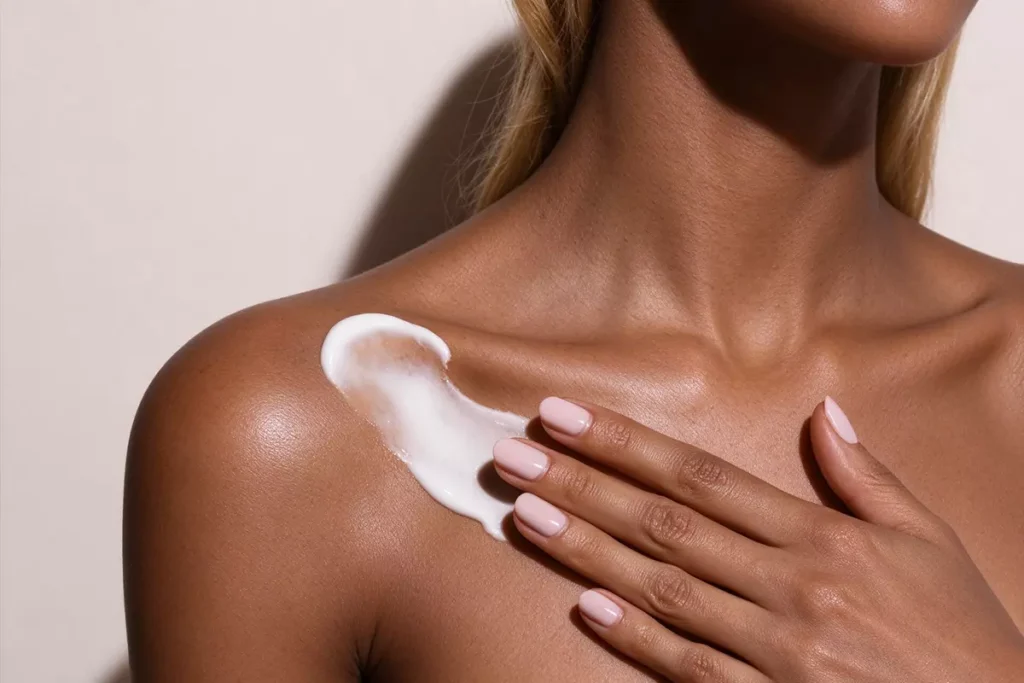
Why Texture Decides Whether a Body Lotion Sells
Buyers judge a body lotion in the first ten seconds of use. Before they notice the scent or the claims, they feel the texture: how it sits on the hand, how far a single pump spreads, whether it absorbs or leaves a film. Get the texture wrong and even a beautifully formulated product gets abandoned on the shelf. That is why texture is a brief-level decision, not a finishing touch your body lotion manufacturer should guess at.
A clear texture brief protects your brand in two ways. First, it keeps the product consistent batch after batch, so a customer in March gets the same experience as one in September. Second, it lets you position the lotion precisely: a lightweight lotion for hot climates, a rich cream for dry skin, a fast-absorbing formula for professionals who apply it between meetings. This guide walks through the rheology vocabulary, the ingredients that control feel, and a practical checklist you can hand to your manufacturer.
The Rheology Basics Every Buyer Should Know
Rheology is the science of how a product flows and deforms. You do not need a lab degree to brief it, but you do need three numbers and concepts:
- Viscosity — how thick the lotion is, measured in centipoise (cP) or Pascal-seconds. A watery fluid is a few cP; a typical body lotion sits roughly between 2,000 and 20,000 cP at room temperature, depending on format.
- Yield value — the force needed before the product starts to flow. A lotion with a high yield value sits still in the bottle but spreads easily once you rub it. This is what prevents settling and gives a “premium, substantial” feel.
- Thixotropy — whether the product thins under shear (rubbing) and recovers when at rest. Mild thixotropy makes a lotion feel light on application yet stable in the bottle.
When you brief your body lotion manufacturer on texture, these are the levers you are actually controlling.
Matching Viscosity to Format and Market
Start by naming the format, because viscosity expectations differ sharply:
| Format | Typical viscosity (cP) | Best for |
|---|---|---|
| Light body lotion / milk | 2,000–8,000 | Hot climates, oily skin, summer lines |
| Standard body lotion | 8,000–15,000 | Daily all-skin-type use, pump bottles |
| Rich body cream | 15,000–40,000 | Dry and mature skin, cold climates |
| Body butter | 40,000+ | Intensive repair, jar formats |
Climate matters more than most buyers expect. A lotion that feels perfect at 22°C in an air-conditioned showroom can turn watery in a tropical warehouse or stiff in a cold one. Tell your manufacturer the markets you will sell into so they can validate viscosity across the expected storage-temperature range.
Thickeners and Rheology Modifiers
Texture is built with a small set of well-understood ingredients. Knowing them helps you ask for the right feel instead of vague adjectives:
- Carbomers and acrylates — deliver a short, cushiony, “non-greasy” feel and high clarity; very common in modern light lotions.
- Xanthan gum and other fermentation gums — give a smooth, stable body and work well in natural-positioned formulas.
- Cellulose derivatives (HEC, HPC) — provide slip and a soft, conditioned after-feel.
- Clays and magnesium aluminum silicate — add a matte, powdery finish useful for oily-skin lines.
- Synthetic hectorite / bentonite — build suspension and a luxurious, dense texture in creams.
The art is in the combination. A single thickener rarely gives the exact feel you want; most manufacturers blend two or three to tune yield value and after-feel. Your brief should describe the target, and let the formulator choose the blend — unless you have a “free from” or “natural origin” constraint that limits the options.
Emulsion Type and Skin Feel
Whether the lotion is oil-in-water (O/W) or water-in-oil (W/O) changes the experience as much as the thickeners:
- O/W lotions feel light, dry quickly, and suit daily and warm-climate use. They are also easier to preserve and cheaper to fill.
- W/O and hybrid emulsions feel richer, lock in moisture longer, and suit dry or mature skin, but they are heavier and more expensive.
If you are unsure, ask your manufacturer for both a standard O/W and a richer variant as lab samples, then run them through the sensory scorecard below before committing to a full order.
Specifying Texture in the Brief
A texture brief is only useful if it is measurable. Include these fields:
- Target viscosity range (e.g. 8,000–12,000 cP at 25°C).
- Measurement method — specify Brookfield or similar, the spindle, and the rpm, because the same lotion reads differently on different setups. Consistency here prevents endless “it feels different” arguments.
- Pick-up and spread — how the product feels as it leaves the jar or pump, and how many strokes to cover a forearm.
- After-feel — greasy, powdery, conditioned, or tacky. Pick one or two as the target.
- Absorption time — seconds to a non-tacky finish, if it matters for your use case.
Building a Sensory Scorecard
Before mass production, evaluate samples with a simple panel. Score each attribute from 1 to 5:
- Initial pick-up (light vs heavy)
- Spreadability (how easily it covers)
- Absorption speed
- Greasiness / oil residue
- After-feel (soft, powdery, conditioned)
- Overall preference
Run the panel at the temperature your customers will actually use the product. A lotion evaluated on a cold morning in winter will score very differently from one tested in a warm bathroom. Document the winning sample — its batch number becomes your reference standard for future reorders.
Stability and Texture Drift
Texture can change on the shelf. Over weeks or months a lotion may thin, thicken, separate, or weep liquid at the surface (syneresis). A good manufacturer runs accelerated stability tests — typically 4–8 weeks at elevated temperature plus a freeze-thaw cycle — to catch drift before launch. If your body lotion manufacturer’s packaging guide specifies clear or thin-walled bottles, transparency makes any separation visible to the customer, so tighter viscosity control is warranted.
Common Texture Pitfalls
- Syneresis — droplets of liquid on the surface, usually from an under-built network. Fixed by adjusting thickener level or adding a suspending agent.
- Graininess — undissolved emulsifier or wax, often a processing-temperature issue rather than a formula issue.
- Over-thickening — feels like paste, poor spread, wasted product per application.
- Tackiness — common with high humectant loads; balanced with esters or silicones alternatives for a cleaner finish.
How Humectants and Emollients Reshape Feel
Thickeners set the structure, but the active sensory character comes from the moisturizing system. Humectants such as glycerin, sodium PCA, and hyaluronic acid pull water into the upper skin and create a plush, cushioned feel, but at high levels they also increase tackiness and can make a lotion feel sticky if not balanced. Emollients and esters smooth the surface, reduce greasiness, and improve slip. A common refinement is to pair a light silicone alternative or a volatile ester with a heavier oil so the lotion feels rich on contact yet finishes clean. When you brief texture, name the target after-feel and let the formulator balance humectant load against emolliency — do not just demand “more glycerin,” or you may trade tack for the elegant finish you wanted.
Working With Your Manufacturer on Reorders
Texture consistency across batches is where many private label lines fail. Protect yourself by asking for three things on every purchase order: a retained reference sample from the approved batch, the measured viscosity with spindle and rpm, and a brief sensory panel summary. If a future batch drifts outside the agreed viscosity band, you have objective data to request correction before it reaches customers. A disciplined body lotion manufacturer’s GMP and certification program makes this routine rather than exceptional, which is why documentation discipline matters as much as the formula itself.
Your Texture Briefing Checklist
- Name the format (lotion, cream, butter) and target viscosity range with test method.
- State the climate and storage conditions for your main markets.
- Choose O/W or W/O, or ask for both as samples.
- List any “free from” or natural-origin constraints that limit thickener choice.
- Define target after-feel in one or two words.
- Request accelerated stability data and a retained reference sample.
Texture is the difference between a formula that works on paper and a product people repurchase. Hand your manufacturer a brief with real numbers, validate it with a sensory panel, and you remove guesswork from the single attribute customers feel first.