








Why Packaging Is a Formulation Decision, Not an Afterthought
Most new buyers treat the bottle as the last step. In practice, the container shapes the formula, the fill cost, and even the shelf life of your product. When you brief a body lotion manufacturer, the packaging spec should travel alongside the formulation spec—not arrive three weeks later when the bulk is already made. The wrong closure leaks. The wrong resin clouds the emulsion. The wrong neck finish means the filler cannot seat the pump, and your production date slips.
This guide walks through how to brief your manufacturer on bottles, jars, pumps, tubes and filling so the finished good looks premium, ships safely, and meets the compliance marks your market requires.
Choosing the Bottle Format
The format drives perception and usage. Four formats dominate private label body lotion:
- Airless pump bottles – best for premium, preservative-light or active-rich lotions. The piston evacuates nearly all product and limits air contact, extending effective shelf life. Cost is higher per unit.
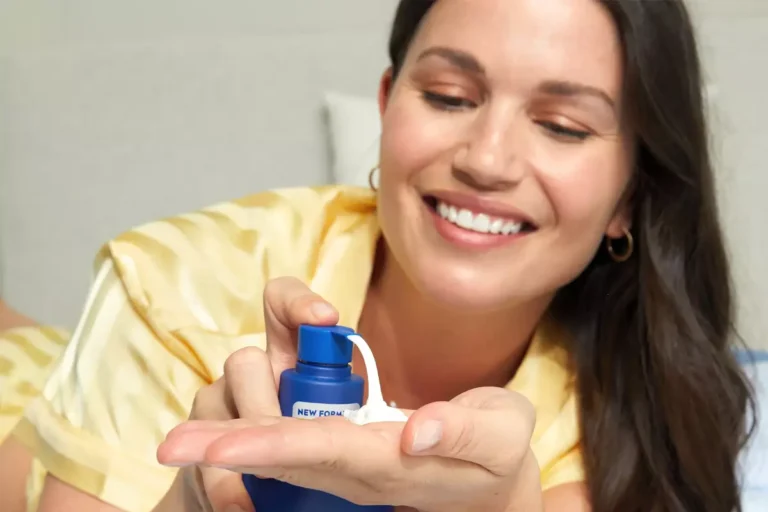
- Standard pump or lotion bottles – the workhorse for everyday body lotion. Reliable, cheap, and familiar to retail buyers.
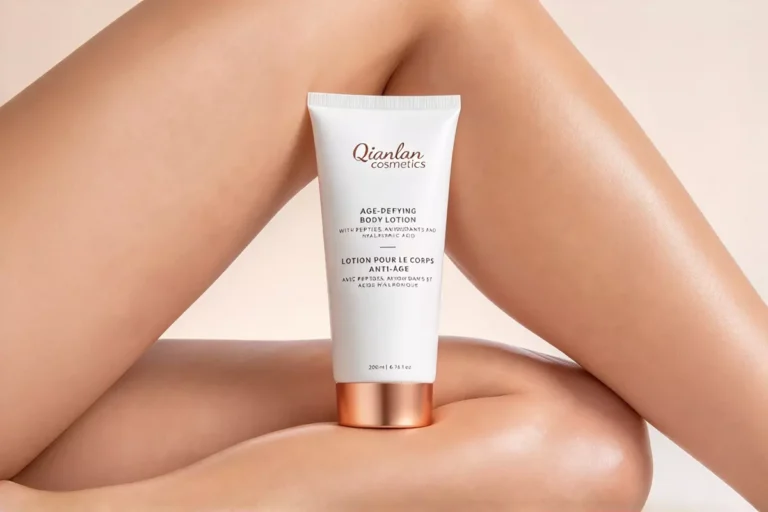
- Squeeze tubes – good for travel sizes, samples, and “clean beauty” positioning. Tubes protect the formula from repeated air exposure at the opening.
- Jars – suited to thick body butters and rich creams where a wide opening helps the user scoop. Jars expose more surface area to air, so they need a robust preservative system.
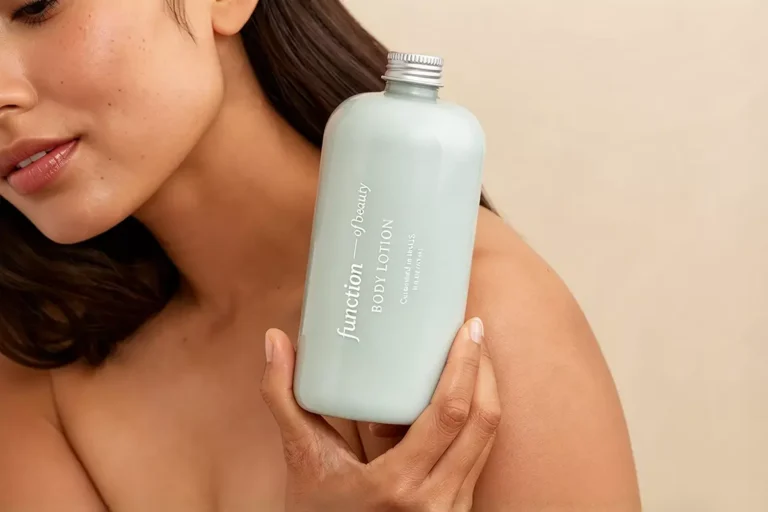
Tell your manufacturer which format you want and, ideally, supply a reference photo or a specific catalog item. Vague requests like “a nice bottle” cost you a revision cycle.
Material Choices: PET, HDPE, Glass and PCR
The resin decides compatibility, weight, and sustainability story:
- PET (polyethylene terephthalate) – clear, rigid, light. Excellent for most lotions and the default for private label.
- HDPE (high-density polyethylene) – opaque, squeezable, chemically tolerant. Common for tubes and budget lines.
- Glass – premium feel, recyclable, but heavier and breakage-prone in transit. Usually reserved for hero SKUs.
- PCR (post-consumer recycled) – increasingly demanded by EU and US retailers. Note that high PCR content can tint the resin and slightly soften clarity; confirm the look with a real sample before committing.
Some active ingredients interact with certain plastics. If your formula uses high citrus oil load or strong solubilizers, ask the body lotion product line planner to validate container compatibility during the brief, not after a failed stability batch.
Closures: Pumps, Flip Caps and Airless Dispensers
The closure is where users form their first opinion. A stiff pump or a cap that cracks in cold storage destroys trust. Specify:
- Output per stroke (e.g. 1.0–2.0 ml) so dosing feels right for a body lotion.
- Neck finish (the thread standard, e.g. 24/410). This must match the bottle or the pump will not seat.
- Locking mechanism for travel and export, to prevent leakage in parcels.
- Color and decoration (matte, metallized, printed) consistent with your brand.
Airless dispensers need a matching bottle collar; they are not interchangeable with standard pumps. Confirm the complete closure+bottle assembly is a proven combination from the manufacturer’s library before tooling.
Capacity and Fill Volume
Retail body lotion commonly ships at 200 ml, 250 ml, 300 ml or 500 ml. Define the nominal capacity and the fill volume separately. A 250 ml bottle is typically filled to 240–245 ml to leave headspace and avoid overflow under heat. Under-filling risks a weights-and-measures complaint; over-filling eats margin. State the target net content exactly as it will print on the label.
Labeling and Compliance
The label is a legal document. For the US market under MoCRA, and for EU/UK under CPNP/SCPN, your label must carry:
- Identity (what the product is, e.g. “Body Lotion”).
- Net quantity of contents.
- INCI ingredient list in descending order of concentration.
- Responsible person / distributor details.
- Warnings and usage directions.
- Country of origin for import.
Your body lotion export compliance certificates feed directly into this step. Give the manufacturer the final artwork as a print-ready PDF with bleed, and confirm they apply it before or after filling per your quality agreement.
Filling and Line Compatibility
Filling method depends on viscosity. Lotions are filled by piston or servo pump fillers; very thick butters by volumetric or auger fillers. Tell the manufacturer your target viscosity (Brookfield, at a stated temperature) so they allocate the right line. Also confirm:
- Cleanroom or hygienic zone grade for the filler.
- Purge with nitrogen if you want to extend oxidative shelf life.
- Date and batch coding placement (base or crimp).
- Leak test and torque check on capped units.
MOQ Implications of Custom Packaging
Stock packaging keeps minimum order quantities low. Custom tooling—a bespoke jar, a printed airless, a unique cap—adds a tooling MOQ (often 5,000–10,000 units) and a one-time mold fee. If you are still validating the market, start with a stock bottle in your color and move to custom once velocity is proven. The private label body lotion MOQ guide covers how order size shifts price per unit and which volumes unlock better filling economics.
How to Write the Packaging Spec for Your Manufacturer
Bundle the following into one brief so there is no ambiguity:
- Format + exact reference or catalog code.
- Resin / material and PCR percentage.
- Closure type, output, neck finish, color.
- Net content and fill volume.
- Decoration (print, label, hot-stamp) with approved artwork.
- Compliance marks required by destination market.
- Secondary packaging (carton, shrink, shelf-ready display).
- Palletization and carton dimensions for shipping.
A complete spec turns a vague inquiry into a quotable project and shortens your time to first production.
Common Packaging Mistakes
- Matching a pump to the wrong neck finish and discovering it at filler setup.
- Choosing a clear PET for a light-sensitive formula without UV additive.
- Forgetting export leak-lock, then absorbing parcel returns.
- Under-specifying decoration, then paying for a reprint.
- Ordering custom tooling before proving the SKU sells.
Frequently Asked Questions
Can I supply my own empty bottles to the manufacturer? Yes, many buyers do, but you then own the compatibility and lead-time risk. Confirm the manufacturer will fill third-party components and who inspects them on arrival.
Which packaging best extends shelf life? Airless pumps and tubes minimize air contact and are the safest choice for preservative-light or active formulas.
How much does custom packaging add to cost? A mold fee plus a higher per-unit price and a larger MOQ. Stock bottles keep unit cost near the baseline.
Do I need PCR content? Only if your retail channel or market requires it. If so, validate the tinted look on a real sample first.
Secondary Packaging, Cartons and Shelf Presentation
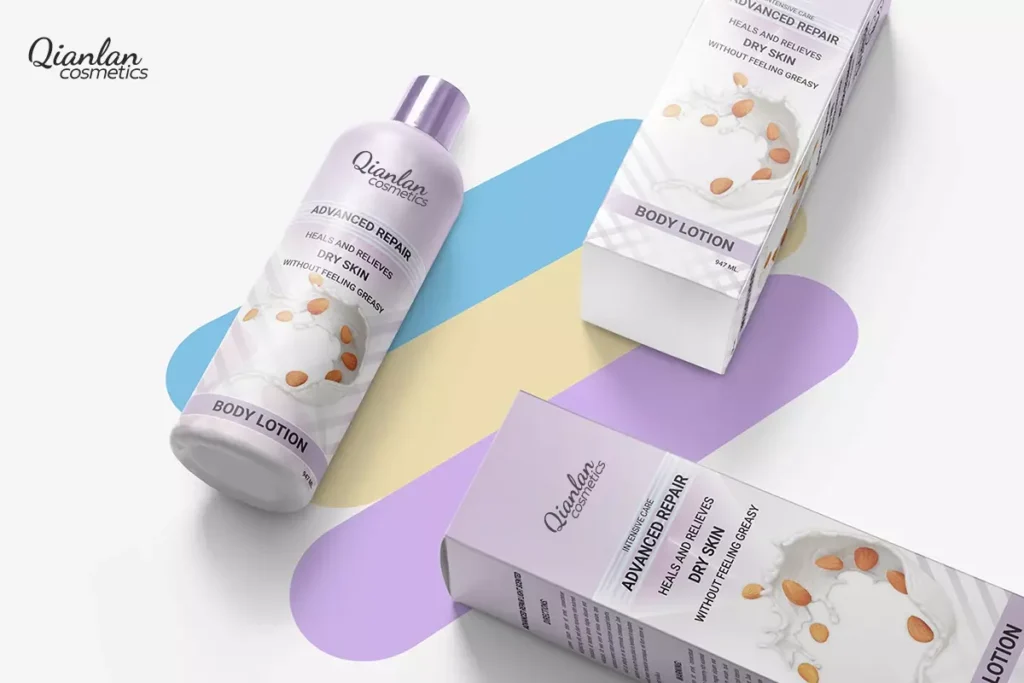
The primary bottle is only half the package. Secondary packaging—the carton, sleeve, or shrink wrap—carries your branding at the point of sale and protects the unit in transit. Specify carton board weight (e.g. 350 gsm), finish (matte, soft-touch, gloss), and print (CMYK or Pantone spot). If you sell into retail chains, ask about shelf-ready packaging (SRP) that opens into a display without repacking. For e-commerce, the priority shifts to a mailer that survives parcel handling and a void-fill strategy that prevents the bottle from rattling. Tell the manufacturer your channel up front; the same lotion needs a different carton for a beauty boutique than for an Amazon FBA shipment, and designing both late adds cost and delay.
Conclusion
Packaging is not decoration—it is part of the product. Brief your body lotion manufacturer on the custom formulation and the package as one connected spec, validate the bottle+closure combination early, and you avoid the two most expensive failures in private label: leakage and a missed production slot. Send a complete packaging brief with your formulation request and you will get a realistic quote and a realistic timeline in return.