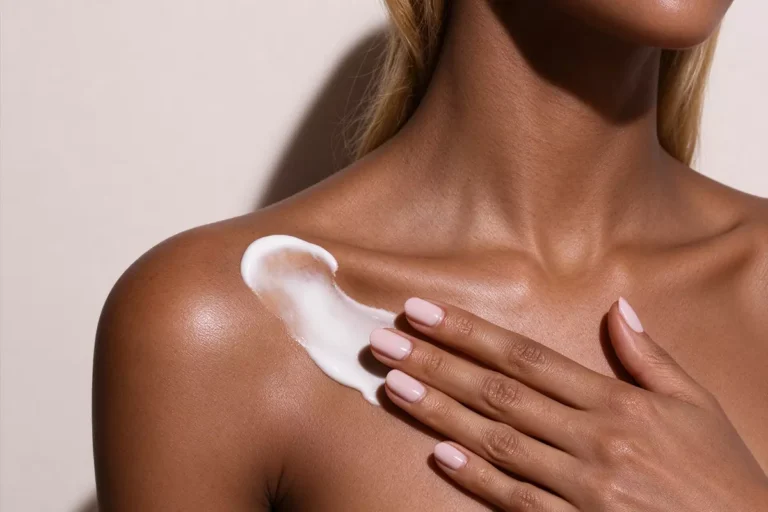









Body Lotion for Normal Skin and Everyday Use: How to Brief Your Body Lotion Manufacturer on a Lightweight, Fast-Absorbing Daily Moisturizer
Not every private label launch needs a treatment-grade, problem-solving formula. In fact, the highest-volume category in the body care aisle is the humble everyday body lotion for normal skin: the lightweight, fast-absorbing daily moisturizer that millions of consumers reach for after a shower. If your brand sells a broad lifestyle or mass-market line, a well-built daily lotion is the anchor product that drives repeat purchases and basket size. The challenge is that “normal skin” sounds simple, yet a sloppy brief to your शरीर लोशन निर्माता can produce a greasy, slow-absorbing, or over-engineered formula that sits on shelves unsold. This guide walks you through a buyer-ready brief for a daily-use lotion, the formulation levers that matter, and how to evaluate samples before committing to a full private label order.
What “Normal Skin” Actually Means in a Formulation Brief
From a formulator’s perspective, “normal skin” is skin that is neither chronically dry nor visibly oily, with an intact barrier and no acute sensitivity. The job of an everyday lotion for this skin type is maintenance, not correction: keep the barrier supported, replace the small amount of water lost during cleansing, and leave a pleasant after-feel without a heavy film. When you brief your body lotion manufacturer, specify the target after-feel explicitly — “light, fast-absorbing, non-greasy, soft matte finish” — because “normal skin lotion” alone gives the lab too much freedom and often produces a heavier cream than your market wants.
Clarify the use context too. A daily lotion used in a humid climate can run lighter than one sold into cold, dry winters. Tell your manufacturer the primary climate and season, and ask for a version tuned to it, or a balanced all-climate base if you ship globally.
The Core Formulation Levers: Humectants, Emollients, Occlusives
A daily body lotion is a balance of three classes of ingredients, and getting the ratio right is what separates a “light” lotion from a “heavy” cream:
- ह्यूमेक्टेंट्स (glycerin, butylene glycol, sodium PCA, hyaluronic acid at low use levels) draw water into the upper skin and deliver the “hydrated” feel. Glycerin at 3–5% is the workhorse; panthenol (pro-vitamin B5) adds a soothing, conditioned skin feel.
- एमोलिएंट्स (light esters, caprylic/capric triglyceride, squalane, Cetearyl alcohol) smooth and soften. For a fast-absorbing daily lotion, favor lighter esters over rich butters so the product doesn’t feel occlusive.
- स्पर्श ध्वनियाँ (dimethicone, shea or jojoba at low levels) slow water loss. In an everyday lotion you want just enough to protect, not a waxy seal.
Ask your शरीर लोशन निर्माता to share the target INCI and the humectant-to-emollient ratio so you understand why the lotion feels the way it does, and so you can adjust in future revisions.
Lotion vs Cream vs Gel-Lotion: Picking the Base
For normal skin and everyday use, a true “lotion” (higher water, lower oil, pourable to lightly viscous) is usually the right call. Creams are richer and better for dry skin; gel-lotions feel cooling and are popular in hot climates but can feel less moisturizing. Request a viscosity range — for example 2,000–6,000 cP at room temperature — so the product pumps and spreads predictably and reads as “light” on the skin. Consistency here also protects your brand: a lotion that is too thin feels cheap, one that is too thick feels greasy.
Actives That Suit Everyday Use (Keep Them Light)
You do not need a long active list for a normal-skin daily lotion, but a few well-chosen, gentle additions increase perceived value:
- Niacinamide (2–4%) — supports barrier function and evens skin tone over time; well tolerated and a strong marketing story.
- Panthenol (1–2%) — soothing, improves skin feel and moisture retention.
- Glycerin-rich base — the single most important “active” for daily comfort.
- Low-level botanical extracts (green tea, oat, aloe) — mostly sensory and marketing, keep them stable and documented.
Avoid piling on exfoliating acids, high retinol, or strong actives in a daily normal-skin lotion; those belong in treatment products and raise irritation and regulatory risk for a mass everyday item.
Texture and Rheology Targets to Put in the Brief
Texture is where everyday lotions win or lose. Tell your manufacturer the sensory profile you want using plain language backed by measurable targets:
| विशेषता | Target for daily normal-skin lotion |
|---|---|
| Spreadability | Easy, glides in 2–3 strokes |
| अवशोषण समय | Under 60 seconds, no rub-in needed |
| के बाद लग रहा है | Soft, conditioned, non-tacky, light matte |
| Residue | None / invisible |
| चिपचिपापन | 2,000–6,000 cP |
If you want to go deeper on feel and viscosity, our guide on briefing your manufacturer on texture, rheology and skin feel covers the measurable specs labs understand.
Packaging for Daily Use
Everyday lotions are used frequently, so packaging ergonomics matter. A 200–400 ml pump or flip-cap bottle is the standard for bathroom convenience; larger 500 ml–1 L refill sizes support value and sustainability claims. Confirm with your manufacturer that the formula is compatible with the chosen bottle and pump (some light lotions leak through low-quality pumps). If you want a premium look, airless pumps reduce oxidation but cost more per unit — weigh that against your price point.
MOQ, Pilot Batch, and De-Risking the Launch
A daily lotion is usually a safe first product, but still run a pilot before a full run. Discuss निजी लेबल के साथ शरीर लोशन MOQ early, and ask for a small pilot batch (for example 200–500 units) so you can validate the formula, packaging, and shelf stability before scaling. A pilot also lets you photograph the real product for your storefront and gather early customer feedback.
How to Evaluate Samples Before Mass Production
When your manufacturer sends samples, test them the way a real customer would:
- Single-blind feel test — apply to clean skin, time absorption, note tackiness and residue after 5 and 30 minutes.
- Stability check — store one bottle warm (40 °C) and one cold (4 °C) for two weeks; look for separation, odor change, or color shift.
- Packaging test — fill the actual bottle, ship it to yourself, and confirm no leakage.
- pH check — skin-compatible body lotions typically sit around pH 5.0–6.0; confirm on the COA.
Document the results and feed them back into a revised brief. A daily lotion is forgiving, but a documented sample protocol is what keeps your line consistent across reorders.
Your Everyday-Lotion Brief Checklist
Before you send the brief, confirm it includes: target after-feel (light/non-greasy), climate/season, viscosity range, humectant-emollient-occlusive direction, gentle active add-ins (niacinamide, panthenol), fragrance direction (light, clean, or fragrance-free), packaging type and size, pilot batch size, and stability expectations. A complete brief is the fastest route to a first sample you can actually sell.
निष्कर्ष
The everyday body lotion for normal skin is the quiet workhorse of a private label body care line. It does not need aggressive actives or a heavy base — it needs a precise, light, fast-absorbing brief and a manufacturer who can hit the feel consistently. Brief for after-feel, validate with a pilot and a simple sample protocol, and you will have an anchor product that earns the repeat purchases your brand depends on. Use the linked resources above to build the rest of your brief, from formulation templates to manufacturer audits and MOQ negotiation.